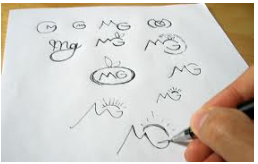
 When developing a brand for a new business, often the first two things created are the company name and the logo. The first goal when developing both is usually to let people know what it is you do, but your logo can go even further.
Unlike a business name, which is often just about getting to the point – Rudy’s Dog Walking, South Hollywood Plumbing – the logo is an opportunity to create a personality for your company. Is it bold and exciting? Down-to-earth and reliable? Fun and family-friendly? All of these qualities can be quickly conveyed by a good logo in a way that your business name just might not have room for.
So look at your current logo. What is it saying about you – and is that the message you want to send?
What are the meanings behind your color choices? Most effective logos make use of just a few colors, so you have to make them count. Use red to bring up feelings of passion, danger, and excitement. Purple is the color of royalty and wisdom. And if you want customers to feel like you’re loyal, trustworthy, and easygoing, blue might be the way to go. Grays, blacks, and navy blue can help you to establish a feeling of professionalism and reliability.
Does your font match your words? Script can set a feminine or whimsical feel, while san serif fonts have a stronger, more masculine feel. Thicker fonts can have a great impact, while thinner fonts can feel more elegant.
Is the graphic clear and relevant? A dog paw might be a great logo for Rudy’s Dog Walking, but it would be a bit confusing for South Hollywood Plumbing. For many businesses, a practical connection like that paw makes sense, but for some more industries, like law or financial services, you might want to go with a photo or something simple and more symbolic instead to convey a more conservative tone.
Does the graphic style match your business? Flowing lines might set the appropriate mood for a relaxing spa, while sharp angles might lend authority to a financial consultant. A cartoony feel can help make a business seem family-friendly and fun, and a single-color graphic can help lend a more straightforward, dependable look.
Was your logo professionally designed? If not… it probably shows, and that makes your business come across as amateur as well. And no, just because clip art was technically professionally designed doesn’t mean that it’s appropriate for a logo. Often, it’s easily spotted a mile away as a stock graphic, and it will make your company seem cheap.
Does it look consistent every time it is used? It should follow specific guidelines for size, font, placement, colors, etc. If it’s constantly changing, it will confuse potential clients and can also make you come across as unreliable and wishy-washy – not to mention unprofessional.
Is it cute and trendy? While this is sometimes appropriate, more often than not, you run the risk of coming across as unprofessional. And if the trend you latched onto for your logo ends, you’ll be stuck either looking outdated or be forced to change it, which can cause confusion for your clients.
If you find that your logo isn’t sending the message you want, then it may be time to go back to the drawing board. When you do, take the time to make sure the look you create really is the right one for you. Frequently changing your logo will do more than just cause confusion – it will contribute to the feeling that you aren’t a professional operation.
About the Author: When Lucy Wright isn’t writing about sign installation, she’s consulting small business owners.